Sister Other Paranoia Content Warnings
Mature themes disclosed for the dark visual novel—read before you wishlist or stream.
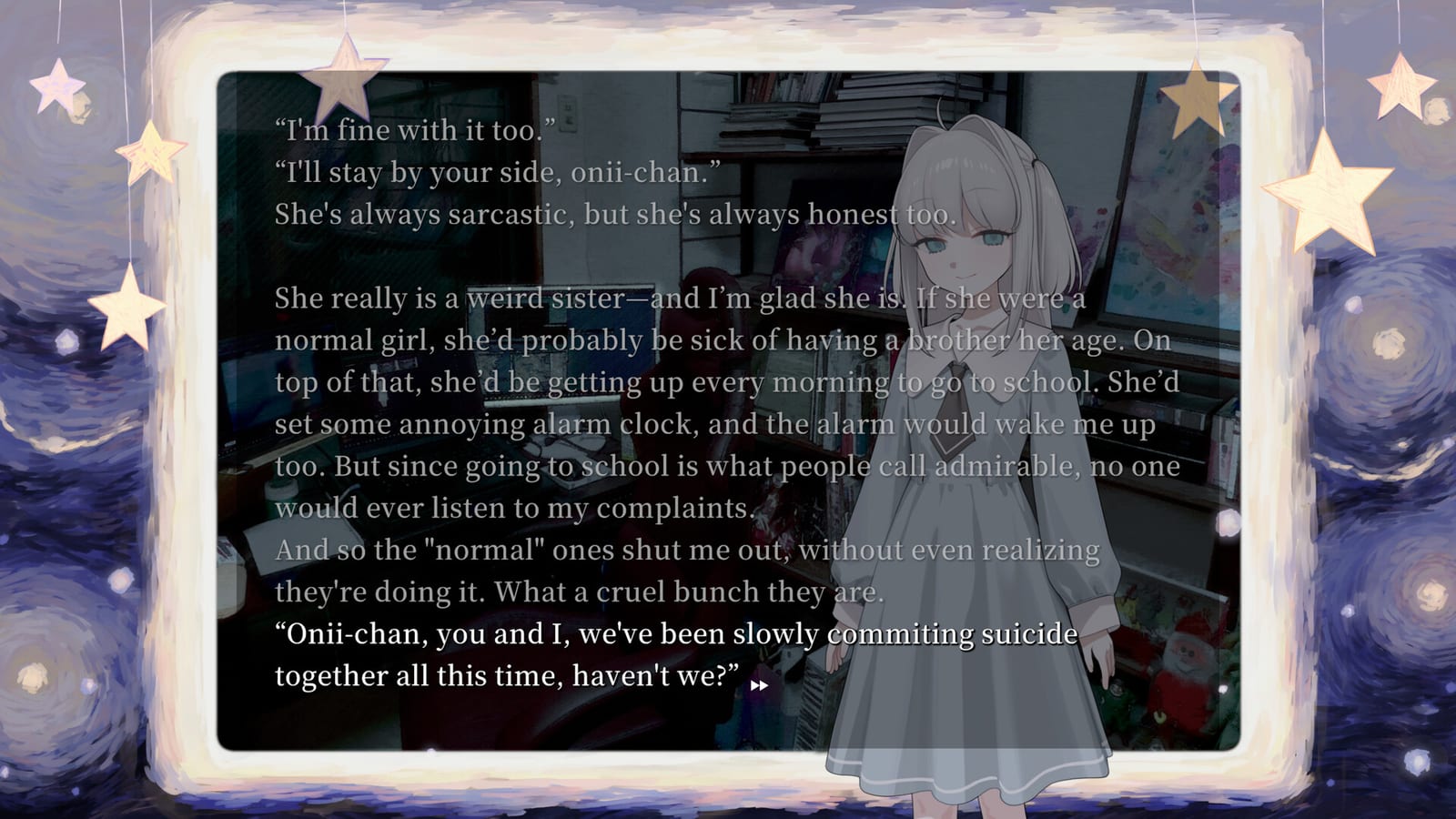
Read this before the store button
Sister Other Paranoia is intended for mature audiences. The developers’ own mature content description—available on the Steam page for app 4240150—is the baseline this wiki mirrors. We expand it into practical player language, but we do not invent extreme content the store does not claim, and we do not soften suicide-related premise elements that the game openly markets.
If you only remember one link from the Story Hub, let it be this page.
Developer-disclosed content
According to the official mature content description, the game includes:
- Depictions of blood and injury, including illustrated CGs described as appropriate for a 16+ style rating (non-graphic in the developers’ framing)
- Mild sexual themes and suggestive imagery
- Themes related to mental health, emotional distress, and psychological instability
The same description states that all content is presented in a fictional narrative context, and that the game does not contain explicit sexual acts or extreme, realistic violence. Players sensitive to the listed topics should know before playing.
Premise elements that are also warnings
Separate from the Steam mature block, the public story pitch itself contains material many players treat as warning-worthy:
- Mind-reading used to attack insecurities
- Driving other people to suicide through psychological targeting
- Unhealthy sibling codependency
- Isolation, paranoia, and social cruelty made intimate through overheard thoughts
- A protagonist whose “comfort” and harm are entangled
Those are not hidden mid-game twists in the marketing; they are the sales pitch. If any item is a hard limit, Sister Other Paranoia is likely a poor fit regardless of the roughly $9.99 price or the mid-August 2026 Steam window.
What “16+ style” injury CGs usually means here
Developer language places blood and injury in an illustrated, non-graphic 16+ style rather than photoreal gore. That can still include distressing imagery: wounds, self-harm implications, aftermath framing, or stylized violence tied to psychological collapse. “Non-graphic” is not a synonym for “harmless.” If illustrated injury is enough to spike anxiety, believe yourself and skip.
Sexual and suggestive material
Official text specifies mild sexual themes and suggestive imagery, and explicitly excludes explicit sexual acts. In practice, that often means charged intimacy, costume or posing suggestiveness, dialogue heat, or codependent physical closeness—especially inside a sister-focused story—without crossing into explicit sex scenes. Tolerance varies widely. If sibling-adjacent suggestive framing is something you do not want on screen, this is a decisive warning even when the store says “mild.”
Mental health and psychological distress
Expect fiction that sits inside emotional distress rather than treating it as a one-episode side quest. Hypersensitivity, depressive isolation, intrusive social hatred, and unstable coping are part of the atmosphere. The game’s questions about happiness are not light self-help copy. Use caution if you are in a fragile period; a well-made dark VN can still be the wrong media diet on the wrong week.
Streaming and audience care
Steam’s about section discusses broad permission to stream and upload the game, including spoilers, with monetization allowed. Permission is not the same as audience safety. Streamers should still:
- Restate suicide and mental health warnings up front
- Consider platform-specific rules for self-harm discussion
- Avoid treating mind-reading murders as clip-friendly comedy without context
- Link viewers to help resources when your community norms call for it
This wiki is not a legal advisor; it is a reminder that “allowed to stream” ≠ “every clip is kind.”
Decision tree
- If suicide themes or psychological harm fantasies are hard limits → do not buy.
- If sibling codependency or suggestive sister-focused intimacy is a hard limit → do not buy.
- If illustrated blood/injury is risky but psychological themes are okay → wait for trustworthy first-hand CG impressions after launch or via any official demo access.
- If you clear those gates → continue to story overview, characters, then wishlist or price.
A free demo mentioned through the game Discord can help you test tone, but a demo may not surface every category of mature content. Do not treat a calm first thirty minutes as proof the whole game is gentle.
Related pages
- Story Hub
- Story overview
- Characters
- Staff
- Release Hub
- Release date
- Tools for an interactive comfort check when available
- Review for expectation framing
- Guides for practical setup after you decide to proceed
Honesty boundaries
We will not claim the game is safe for all teens simply because a 16+ style phrase appears in a mature content blurb. We will not claim it is adults-only extreme horror when the developers deny explicit sex and extreme realistic violence. We will not invent trigger lists for scenes that are not public. The responsible middle is exact: believe the disclosed categories, believe the suicide-related premise, and leave final comfort judgment to you.
Sister Other Paranoia wants you to witness a future for its protagonist and his sister. Content warnings exist so that witnessing is a choice, not an ambush.
Frequently Asked Questions
Quick answers to the most common questions.
What are the official mature content warnings?
Blood and injury CGs in a 16+ illustrated style, mild sexual themes and suggestive imagery, and mental health / emotional distress / psychological instability themes. The developers say there are no explicit sexual acts or extreme realistic violence.
Does the story involve suicide?
Yes. Official premise materials state mind-reading can be used to drive people to suicide by targeting insecurities.
Is the game sexually explicit?
Official mature content text says no explicit sexual acts. It does include mild sexual themes and suggestive imagery.
Should streamers add extra warnings?
Yes. Even if Steam permits streaming, audience-facing warnings for suicide, mental health, and suggestive sibling-focused material are still wise.