Sister Other Paranoia Gameplay Hub
Classic visual novel flow, denpa tension, and what is confirmed before release.
What this hub covers
Sister Other Paranoia is a dark psychological visual novel from HazeDenki, written and directed by nyalra, and published worldwide by Serenity Forge. Before you dig into trailers, wishlists, or the Discord demo, it helps to understand how the game is designed to feel in the hands: slow, intimate, and deliberately “old-school.” This hub collects everything we currently know about systems, presentation, and player agency so you can decide whether the tone matches what you want from a late-summer 2026 release.
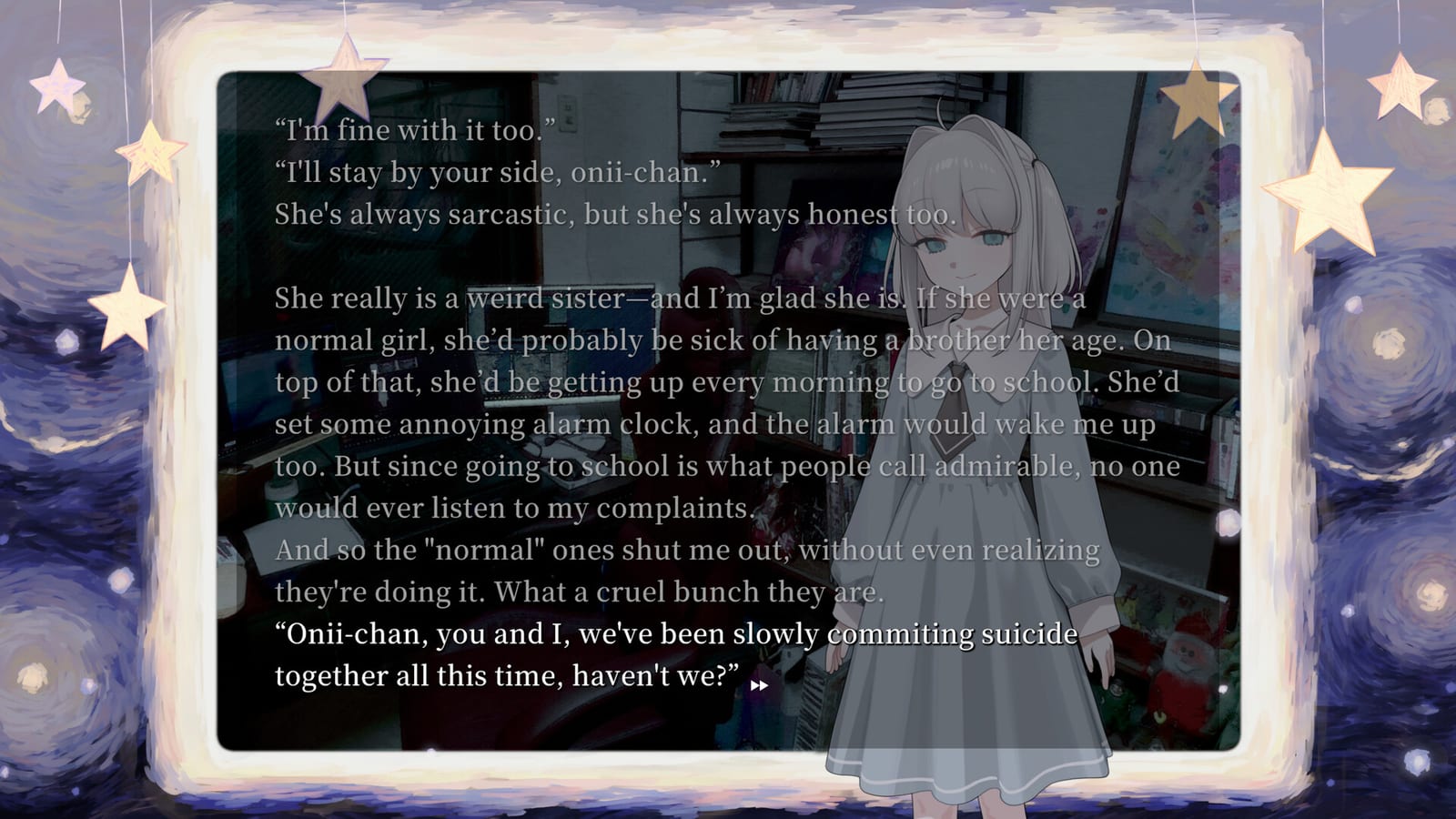
Official materials describe a classic visual novel loop rather than a hybrid RPG, management sim, or puzzle layer. You read, you click, you sit with atmosphere. The Steam page and publisher copy emphasize full-screen text, simple advance input, and the option to hide text so you can look at the art. That framing matters because it sets expectations for pacing, session length, and how much “game” sits around the story.
Use the pages below as a map. Start with How to Play if you are new to visual novels or want a plain-language overview. Jump to Controls if you care about keyboard, mouse, and interface habits. Read Mind Reading when you want the thematic system explained without spoiling a finished route list. Finish with Choices for what is known—and what is still unconfirmed—about branching and consequence.
Confirmed design pillars
Several pillars are public and consistent across Steam, Serenity Forge, and press coverage:
- Classic VN presentation. Text fills the screen. Advance by clicking. Right-click can hide text so you can enjoy CGs and scenes without a dialogue box covering the frame.
- Psychological / denpa tone. The story follows a reclusive light-novel author who becomes able to read minds, then retreats further into isolation. His remaining comfort is a gifted but lonely younger sister. Their bond is framed as codependent and unhealthy, not as a light rom-com setup.
- Mind reading as pressure, not a party trick. Official copy states that friction with other people can escalate into moments where the protagonist uses telepathy to strike at deep insecurities and push targets toward suicide. The game asks whether that is “okay,” and what happiness even means in that moral fog.
- Mature themes with clear warnings. Blood and injury (illustrated CGs described as appropriate for a 16+ style presentation, non-graphic), mild sexual or suggestive content, and mental-health distress are all listed. There is no claim of explicit sexual acts or extreme realistic violence.
- Accessible PC release window. Steam lists a planned unlock around August 14, 2026, with a price point reported around $9.99. Windows is the documented baseline; macOS has also been reported in coverage. Treat platform notes as subject to the store page on launch day.
Those pillars are enough to plan your first session: expect reading-forward sessions, emotional intensity, and systems that serve the narrative rather than a build planner.
How sessions are likely to feel
Because the developers repeatedly call the game a “straight-up classic visual novel,” your primary verb is read. That sounds obvious, yet it changes how you should approach the title compared with Needy Streamer Overload / NEEDY GIRL OVERDOSE, which mixes streamer management and systems. Sister Other Paranoia is presented as vibe, text, and art first. If you bounce off dense monologue or want constant mechanical feedback, check the demo guide and trailer breakdown before buying day-one.
Expect a rhythm that alternates between suffocating social friction and the private “home” space shared with the sister. Publisher language leans hard on that contrast: the outside world is petty, envious, and ugly; the room with his sister is the remaining comfort. Gameplay language around mind reading suggests that the fantasy of silencing outsiders is available as a story tool, not as a separate combat mode with meters and loot.
For a practical onboarding path after purchase, pair this hub with Getting Started and How to Buy. For creator context and expectation-setting versus the earlier hit, see From Needy Streamer Overload.
Systems pages in this category
How to play
The How to Play page explains the reading loop in beginner-friendly language: what a classic VN session looks like, how to pace yourself through heavy themes, and which official features (streaming permissions, language support) affect your setup. It is the best first stop if you have never finished a kinetic or lightly branching novel.
Controls
Controls focuses on the confirmed interaction model—click to advance, right-click to hide text—and what that implies for accessibility, screenshots, and couch-versus-desk play. Full keybind tables are not published yet; we keep the page honest about that gap and update when patch notes or manuals appear.
Mind reading
Mind Reading digs into the signature fantasy: reading thoughts, exploiting insecurity, and the ethical discomfort the marketing deliberately puts in front of you. It stays spoiler-light and avoids inventing mechanics that Steam has not described.
Choices
Choices separates confirmed narrative stakes from speculation about route maps, ending counts, and save habits. Pre-release honesty matters here: until the full game ships, treat branching claims outside official materials as provisional.
Who this gameplay style is for
You will likely enjoy Sister Other Paranoia’s gameplay framing if you want:
- Long stretches of character writing without combat interruptions
- Denpa / psychological unease rather than empowerment fantasy
- Art-forward scenes you can clear the UI to admire
- Moral discomfort built into the premise itself
You may want to wait for reviews or finish the Discord demo first if you need:
- Deep systems, crafting, or deckbuilding
- Light tone and safe emotional distance
- Guaranteed multiplayer, co-op, or live-service loops (none are part of the pitch)
Pre-release honesty checklist
This wiki treats Sister Other Paranoia as an upcoming title. That means:
- We do not invent endings, hidden routes, or achievement lists.
- We cite public pillars (classic VN, mind reading, codependent siblings, mature tags) and mark unknowns clearly.
- Demo distribution via Discord is reported community-facing information; always verify the current invite and build notes in official channels.
- Price, exact unlock time by timezone, and macOS parity should be rechecked on Steam near launch.
When the game releases, this hub will expand with post-launch control tables, confirmed choice structures, and spoiler-gated sections. Until then, use these pages to calibrate expectations—not to chase a fake completeness score.
Suggested reading order
- How to Play — baseline loop
- Controls — input and UI habits
- Mind Reading — thematic system
- Choices — agency and save advice
- Return here, then branch into Guides Hub for trailer, demo, purchase, and series context
If you only have ten minutes, read the mind-reading page and the content-warning sections in Getting Started. Those two pieces tell you whether the game’s fantasy is something you want in your library.
Related guides outside this hub
Gameplay does not live in a vacuum. Pair systems reading with story-facing guides:
- Trailer Breakdown for visual and tonal cues from the official trailer
- Demo for trying the vibe before August
- How to Buy for Steam wishlist and launch-day logistics
Together, those pages keep you oriented without spoiling a plot that is still days from public unlock.
Frequently Asked Questions
Quick answers to the most common questions.
Is Sister Other Paranoia a classic visual novel or a systems-heavy game?
Official materials describe an old-school classic visual novel: full-screen text, click to advance, and the option to hide text. It is not pitched as a management sim like Needy Streamer Overload.
Where should I start in the Gameplay section?
Begin with How to Play, then Controls, Mind Reading, and Choices.
Is co-op or multiplayer part of the gameplay?
No. Public materials present a single-player narrative experience. There is no advertised co-op mode.
Can gameplay pages spoil endings?
This hub stays pre-release honest and does not invent endings. After launch, spoiler sections will be clearly marked if route details are added.